Barcelona Open Wood
Barcelona Open Wood will be launched within the framework of Barcelona 2026 World Capital of Architecture as a cycle of guided tours of iconic buildings built of timber in Barcelona. The initiative will highlight timber as a sustainable and innovative material that’s key to the future of construction.
Throughout 2026, professionals, students and citizens will be able to acquire first-hand knowledge of leading wooden architecture projects, guided by their authors and technical teams. The visits will allow them to explore the architectural criteria, construction issues and environmental benefits of this system, which has established itself as an efficient response to the current climate challenges.
Organised by Construmat with the support of World Wood Future, Barcelona Open Wood is a meeting point that enables visitors to learn how timber can endow construction with a more sustainable and innovative future.
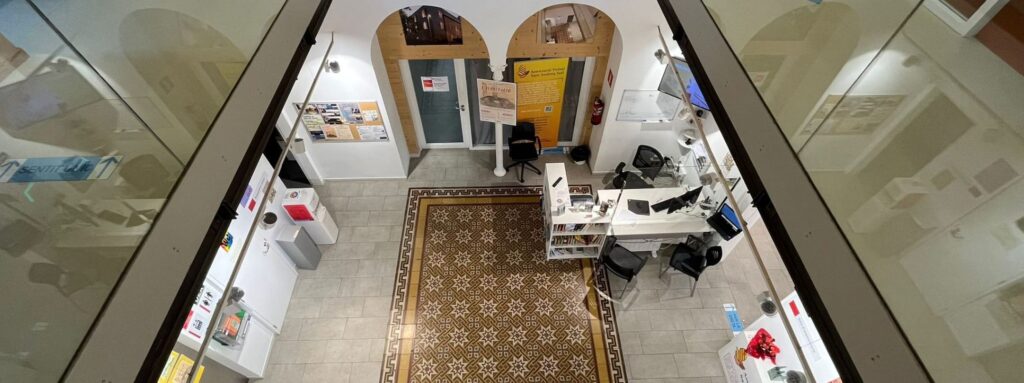
Community facility
Can Portabella neighbourhood centre
- Monday, 13 April
- 12 pm
- 4.15 pm
- 6 pm
- C. de Virgili, 18, 08030 Barcelona
How to refurbish a 19th-century mansion using timber to give it a new social function. Guided tour with the project team (architects, contractor and manufacturer).
A 19th-century building formerly owned by the Barcelona Cotton Society which has been used in recent years as a neighbourhood centre. It was previously in very poor condition. The refurbishment has conserved three original façades, which are externally insulated with wood fibre to maintain the thermal inertia of the existing stone façade. The ground floor’s slab has also been preserved, revealing the metallic structure and the ceramic vaults. The rest of the building has been rebuilt and expanded to the east, while another floor with a prefabricated wooden structure has been added.
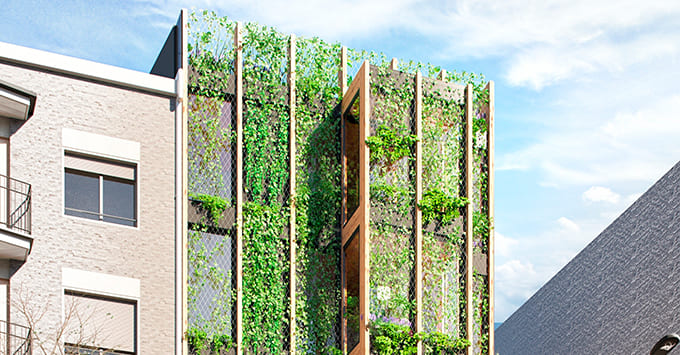
Multi-home building
Casa A
- Friday, 22 May
- 11 am
- 5 pm
- Avinguda Mare de Déu de Montserrat, 206, 08041 Barcelona
How to build a multi-family timber building, rising several storeys and set between party walls. Guided tour with the project team (architects, contractor and manufacturer).
A multi-home residential building with dividing walls, a ground floor, five upper floors and two more below the ground with a courtyard.
It has one flat for each floor with two façades, facing the street to the north and the inner courtyard to the south.
The layout of the CLT timber structure allows for different options, ranging from an open distribution to the creation of three rooms suited to the needs of each user. All the rooms have a façade.
You can register from one month before your visit.
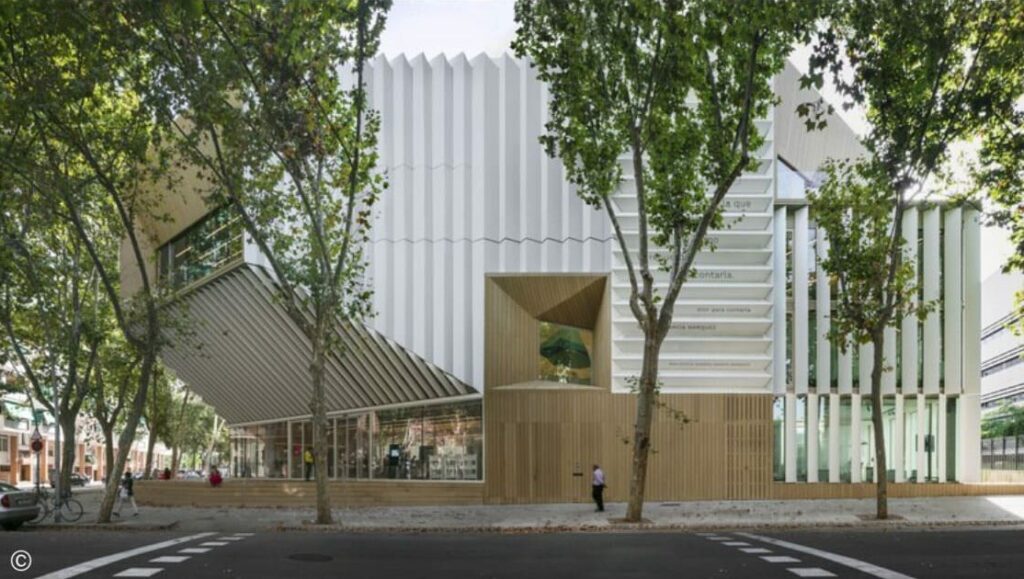
Cultural facility
Gabriel García Marquez Library
- Monday, 15 June
- 1:30 pm
- Plaça de Carmen Balcells Segalà, 1, 08020 Barcelona
How to build a timber cultural facility with a distinctive identity and turn it into a global reference. Guided tour with the project team (architects, contractor and manufacturer).
The Gabriel García Márquez Library stands on a chamfered plot of land, taking the shape of a pile of books stacked along the edge of the slope. It has an exposed timber structure covered with glass and panels to simulate folded pages interrupted by four large windows strategically placed towards the tops of the trees surrounding the building. It’s the work of architects Elena Orte and Guillermo Sevillano, who form part of the Suma Arquitectura team. The building’s 3,429 m2 of usable space is spread over six floors with a central staircase linking all the areas of the library. On the roof above the main staircase the glass envelope acts as a solar chimney and distributes the natural light to the basement connected to the outdoor garden.
You can register from one month before your visit.
BIT Habitat head offices
Ca l'Alier
- Friday, 17 July
- 10 am
- 4 pm
- Entrance via Pere IV, 362-364, 08019 Barcelona
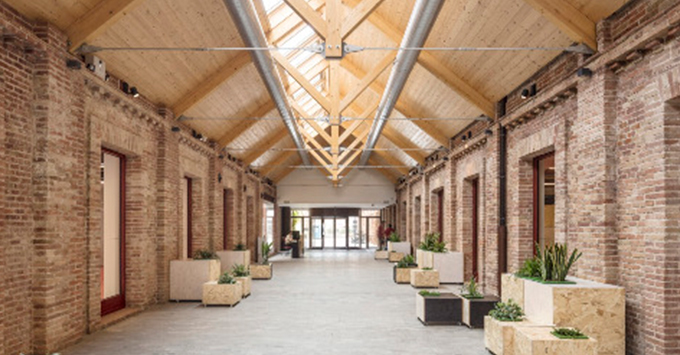
How to refurbish a fire-damaged yet recoverable industrial hall using timber, preserving its industrial character while equipping it for urban innovation services. Guided tour with the project team (architects, contractor and manufacturer).
Ca l’Alier is an old factory in the Poblenou district of Barcelona which is listed as an asset with elements of interest (category C). It currently houses the head offices of the BIT Habitat Foundation, which shares the space with CISCO Systems and UNESCO GIGA. Three terraced warehouses of different sizes from the original factory have been preserved. The old, circular and tapered exposed brick chimney is an emblematic feature of the neighbourhood.
You can register from one month before your visit.
Step-by-step Enerphit refurbishment of a single-family home
Casa Showpass
- Friday, 18 September
- 11 am
- 5 pm
- Passatge General Bassols, 19, 08005 Barcelona
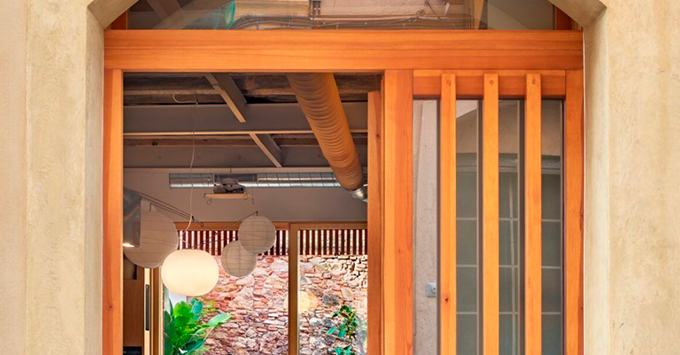
How to refurbish a historic house in Poblenou using healthy materials while meeting all Passive House standards. Guided tour with the project team (architects, contractor and manufacturer).
The ShowPass visualises the benefits of the Passive House in terms of comfort, health and energy savings, applying its strategies to a typical Mediterranean home. Energiehaus has designed the ShowPass upon the basis of the international Enerphit-Plus refurbishment standard, obtaining the Step-by-Step certificate. The building has also been certified as Co2-neutral, producing much of the energy for the daily consumption of a family of four by means of photovoltaic panels.
You can register from one month before your visit.
School
Escola La Mar Bella
- October (to be confirmed)
- To be specified
- Plaça de Sant Bernat Calvó, 2 , 08005 Barcelona
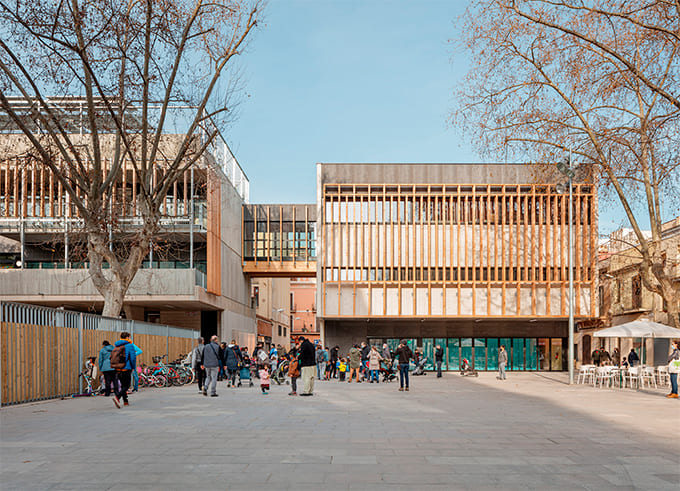
How to build an inclusive educational facility — bringing together not only diverse communities but also a diversity of materials, with timber playing a key role. Guided tour with the project team (architects, contractor and manufacturer).
The Escola La Mar Bella is the result of the refurbishment and expansion of the existing school, which now has two lines rather than one. The building is divided into three sections that are inter-connected to form a single whole. The first section is the fully-renovated original school building built in the 1950s. The second section is a new building with a ground floor and two upper ones connected to one of the ends of the existing building. The third section is a free-standing building which is connected to the others by a bridge over the public space. The materials used throughout the project speak for themselves. Simple, long-lasting, resistant and low-maintenance solutions. Concrete, wood and textile roll-up awnings are the dominant features that give the facility a unified image. A project conceived under nZEB parameters. Built with materials that leave a low carbon footprint. The envelope has low thermal transmittance. Special attention has been paid to the solar protection and maximising the natural ventilation. The complex has a 50 kW photovoltaic installation that also creates shaded spaces in the outdoor play areas. The original building has undergone a profound transformation but the existing elements have been retained as far as possible. Its thermal performance is improved by insulating the entire envelope.
You can register from one month before your visit.
Sports facility
Poliesportiu Turó de la Peira
- Friday, 20 November
- Carrer de Sant Iscle, 50, 08031 Barcelona
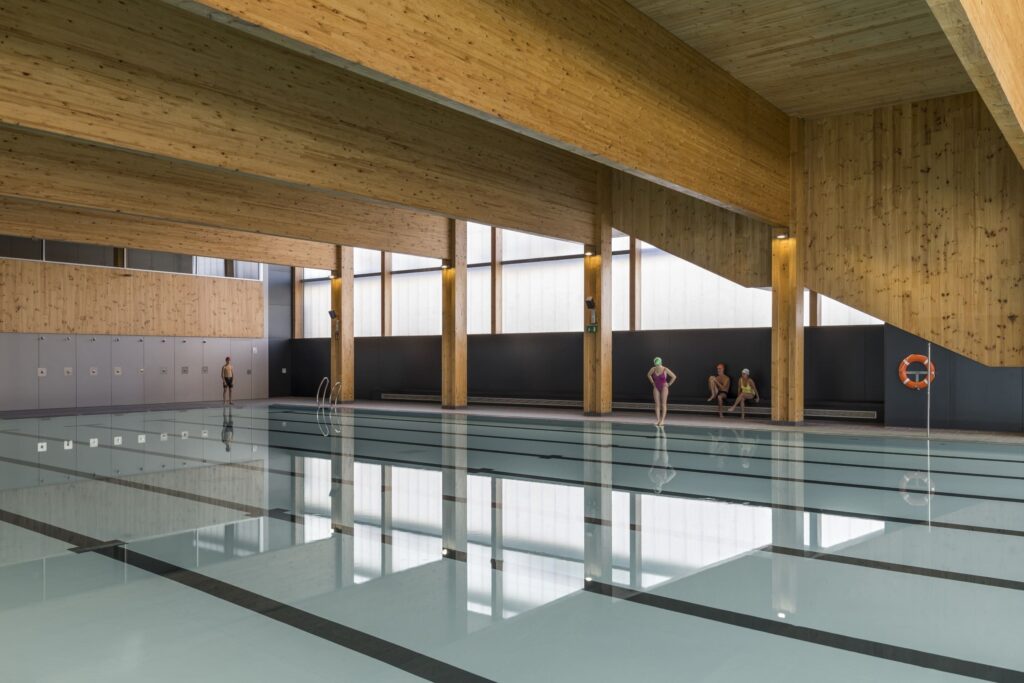
How to build a new multi-sports facility using high-performance timber — highly versatile and open to the neighbourhood. Guided tour with the project team (architects, contractor and manufacturer).
The winner of the Sports Buildings category of the WAF2019 awards due to the integration of its landscape into the urban environment, its sustainability and its social commitment, and the Winner of the 2019 Mapei Sustainable Architecture Award.
Energiehaus is behind the energy optimisation of the new project to build a swimming pool and all-purpose sports hall in Turó de la Peira, seeking to achieve a nearly zero energy building (nZEB). This optimisation process is performed by means of an energy analysis of the building using a dynamic calculation. This calculation has enabled us to verify the suitability of the strategies. We can thus provide the project managers with the support required to optimise the building’s passive architecture.
The building boasts a significant photovoltaic installation that can cater for up to 90% of the energy it consumes.
The building has a unique cross-laminated timber structure and a hydroponic green façade. The result of a detailed analytical process involving thermodynamic and lighting simulations, the building has an optimised thermal envelope with an innovative natural ventilation solution for the multi-purpose sports hall. The project has obtained the LEED-Platinum certification.
You can register from one month before your visit.
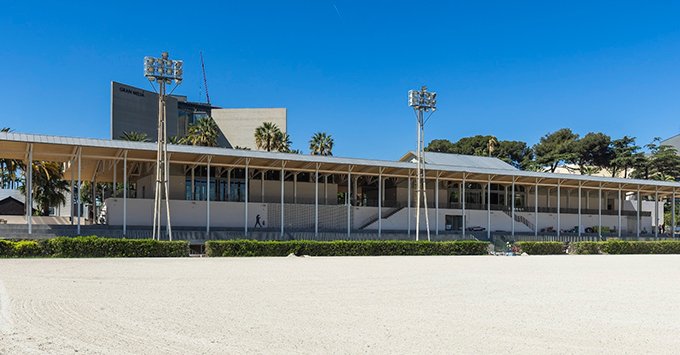
Sports and social facility
Stand R. C. Polo BCN
- Wednesday, 9 December
- 12:00 pm
- Avenida Doctor Marañón 19, 08028 Barcelona
How to rebuild a historic timber sports grandstand, providing exceptional capacity and a wide range of uses. Guided tour with the project team (architects, contractor and manufacturer).
The modern 9,000-m2 building, conceived in accordance with the highest design and sustainability standards, contains a large two-level fitness centre 750 m2 in size, several activity rooms designed to house all the Sport Centre’s activities, a cycling room equipped with the new Life Fitness IC7 bikes, the most precise potentiometers on the market, and a high-performance personal training room.
There are also two new swimming pools: a 25-metre one for competitive swimming with delimited lanes and the temperature of the water suited to the activity, and another smaller one measuring 15 m designed for aquatic activities.
Another of the major innovations has been the creation of the Saló Olympia, a new 400-m2 multi-purpose hall designed for meetings, conventions and all kinds of internal and external events. It can seat 400 people with a further 700 standing and it excels in terms of its brightness and modern and sustainable design, which makes extensive use of timber.
You can register from one month before your visit.
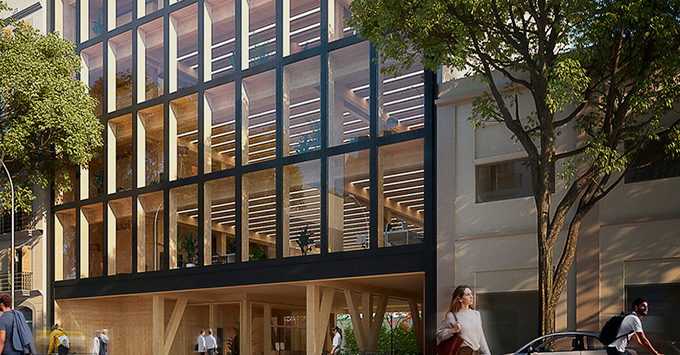
Edifici d'empresa i comercial
Wittywood
- octubre
- Entrada per Pere IV, 362-364
Wittywood es un edificio único de oficinas, siendo el primero construido en madera en España, dando pie a lo que será el futuro de los edificios de oficinas.
CONSTRUMAT 2027
PARTNER platino








BARCELONA 2026 WORLD CAPITAL MUNDIAL OF ARCHITECTURE
ACTIVITY ORGANIZED BY:


Main sponsor

Official sponsors





In collaboration with